
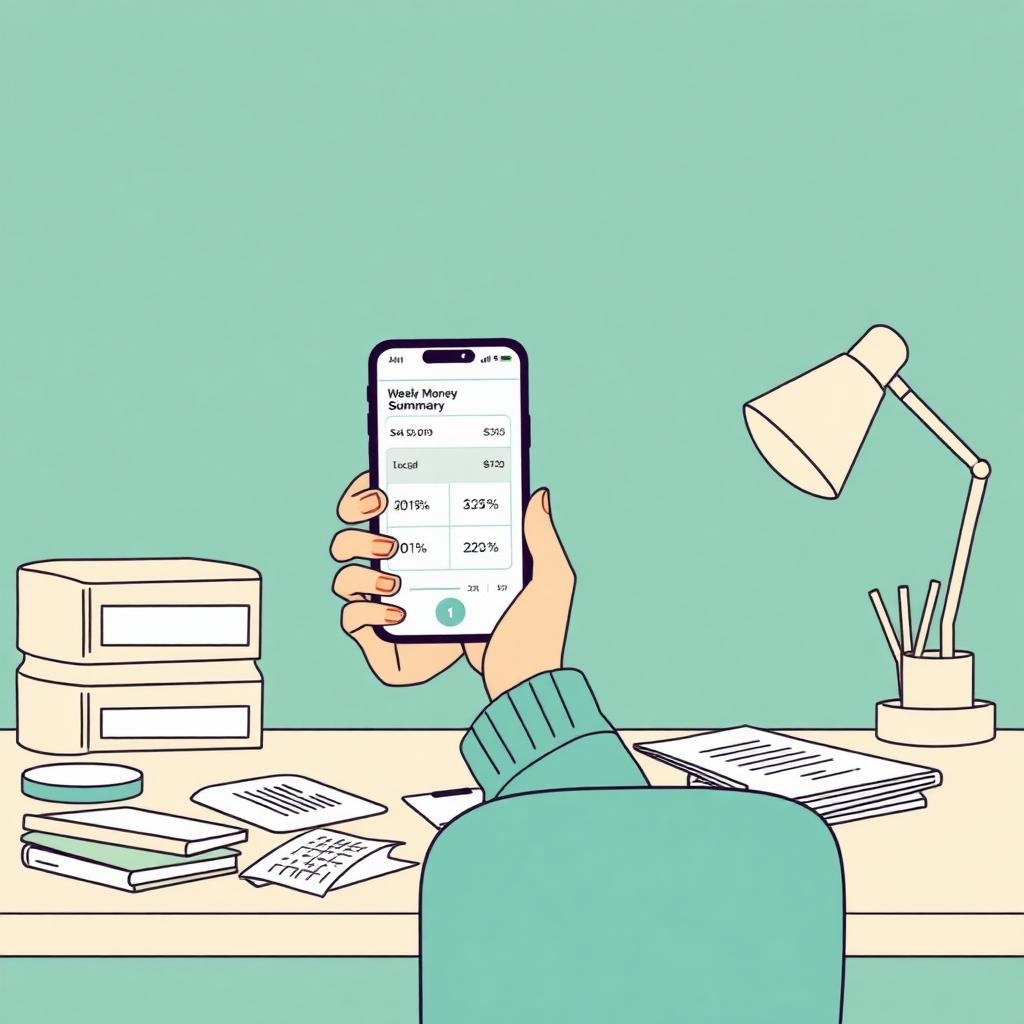
The best budgeting apps for ADHD are the ones that require almost no daily input — apps that connect to your bank, categorize spending automatically, and show you what happened once a week instead of asking you to log every coffee. Traditional budgeting apps fail ADHD brains not because the person lacks discipline, but because the app's core design depends on consistent daily data entry, which is exactly the thing executive-function differences make hardest. If you have tried YNAB, Mint, or a spreadsheet and abandoned it within two weeks, the fix is usually a lower-effort system, not more willpower.
That two-week abandonment point isn't random. Most budgeting apps front-load the work: set up categories, assign every dollar, reconcile transactions, adjust when you overspend. Miss three days and the app becomes a wall of red numbers. For a lot of people — ADHD or not — that's the moment it gets deleted.
Want to see where your own money actually goes? Try Spendalyst free for 14 days →
A note before we go further: this article is about app design and money habits, not treatment. Nothing here is medical advice, and ADHD is best discussed with a clinician who knows you.
Why do budgeting apps fail for people with ADHD?
Budgeting apps fail for people with ADHD because they charge a daily "tax" of attention and punish you the moment you stop paying it. This is the core reason ADHD and money management collide inside most apps — three specific design choices do most of the damage.
They require sustained manual input. Zero-based budgeting — the YNAB model — asks you to assign every dollar a job and re-assign it whenever reality moves. It's a genuinely excellent system for people who enjoy the ritual. If maintaining the ritual is the hard part for you, the system collapses on its first bad week.
They punish gaps instead of absorbing them. Miss a few days and you come back to 60 uncategorized transactions and four blown categories. There's no "welcome back, here's the one thing that mattered." Shame is a terrible onboarding flow, and it's the default one.
They confuse tracking with insight. Watching a number tick up in a category doesn't tell you what to change. Daily expense logging creates busywork with a poor effort-to-outcome ratio — you spend the attention and still don't know which subscription to cancel or which category quietly grew by $180 this quarter.
If that pattern sounds familiar, our post on why people quit budgeting apps breaks down the abandonment curve in more detail, and YNAB too complicated? covers the specific friction points in the most-recommended app on this list. For the spending side of this — why the purchases happen in the first place and what actually reduces them — see ADHD impulse spending.
What makes a budgeting app ADHD-friendly?
An ADHD-friendly budgeting app minimizes the number of decisions between you and useful information. If budgeting for ADHD is going to survive past week two, look for five things:
Notice that none of these are "more features." The ADHD-friendly direction is almost always less app, not more.
What are the best budgeting apps for ADHD in 2026?
There's no single winner for everyone — it depends on whether you want a system to run or a report to read. Here's an honest comparison of the main options.
| App | Cost (2026) | Daily effort required | Best for | Main drawback |
|---|---|---|---|---|
| Spendalyst | $10.99/mo, 14-day free trial, no card | None — eligible Monday check-in when enough data is available | People who want to know what happened without maintaining a budget | No zero-based budgeting if that's what you want |
| YNAB | ~$109/yr | High — ongoing assignment | People who genuinely like the method and stick with it | Steep learning curve; unforgiving after a gap |
| Monarch Money | ~$99/yr | Medium | Couples and detailed net-worth tracking | Feature-dense; a lot of dashboard to parse |
| Copilot | ~$95/yr | Medium | iPhone/Mac users who like polished design | Apple-only; still expects category review |
| Rocket Money | Free tier; premium varies | Low | Subscription cancellation specifically | Upsell-heavy; budgeting features are shallow |
| Simplifi | ~$48/yr | Medium | A cleaner Quicken-style experience | Setup is still category-first |
The same "does it survive a bad week?" test applies to any household running on one person's attention — we applied it app by app in budgeting apps for single moms.
Spendalyst is our product, so take this with the appropriate grain of salt — but the design premise is exactly the ADHD-friendly checklist above. You connect your accounts through Plaid (Chase, Wells Fargo, and 12,000+ banks), or use manual entry if you'd rather not connect at all. There's no budget to build. Once a week, on Monday, a coach card arrives with specific dollar figures — what you actually spent, what moved, and one thing worth looking at. You also get a watchlist of recurring charges and price rises and spending reports with a 6-month trend, so patterns show up without you assembling them. The 14-day trial doesn't ask for a credit card, which matters if "cancel before you get charged" is a task you know you'll forget.
YNAB deserves genuine respect here. Its method works, its community is real, and its own blog writes thoughtfully about ADHD. But it is the highest-effort option on this list by design. If daily assignment is the wall you keep hitting, YNAB is asking you to climb it more carefully rather than removing it.
Monarch Money is the strongest all-rounder for people who like data. If you want net worth, investments, and shared household budgeting in one place and you enjoy a dashboard, it's excellent. If dashboards make your eyes slide off the screen, it's a lot.
Copilot has arguably the nicest interface in the category, with smart categorization that improves as you correct it. The catch is that "as you correct it" is still a recurring task, and it's Apple-only.
Rocket Money is worth having specifically for subscription cancellation — it's good at it. Just know that it nudges you toward paid upgrades frequently, and the budgeting side is thin. Our Rocket Money alternatives post goes deeper on where it fits.
How do you manage ADHD finances without any budget at all?
You automate the money you can't afford to think about, then spend what's left without tracking it. This "no-budget system" is one of the more reliable ways to handle ADHD finances because it removes decisions rather than adding reminders — which is the whole game when you're trying to stop spending money impulsively.
The tracking layer's only job in this system is step 4 — telling you what changed. That's a much smaller job than "maintain a budget," which is why it survives contact with a busy week. We wrote a fuller version of this approach in how to manage money without budgeting.
What should you do first if opening your banking app makes you anxious?
Start with one 20-minute session — not a system, a session. Avoidance is the most common failure mode, and it compounds quietly: unopened statements, forgotten subscriptions, an overdraft you find out about from a fee.
Set a timer. Connect your accounts (or export the last 90 days as CSV if you'd rather do it by hand). Then look at exactly two things: your recurring charges, and your largest spending category. Nothing else. Most people find at least one subscription they forgot about — our guide to finding hidden subscriptions walks through the statement scan, and the subscription cost calculator gives you an annual number in about a minute.
Then close it. That's the whole assignment. If the anxiety around checking is the real blocker, scared to check my bank account is the more useful starting point than any app comparison.
How much should an ADHD-friendly money app cost?
Expect $48–$110 per year for a paid personal finance app in 2026 — Simplifi at the low end, YNAB and Monarch near the top, Spendalyst at $10.99/month. Free tiers exist, but they're usually funded by product referrals, which shapes what the app recommends to you.
The honest test is simple arithmetic: does it surface more than it costs? One forgotten $17/month subscription is $204 a year. If an app finds that in your first month, it has paid for itself and then some. If after 60 days it hasn't changed a single decision you made, cancel it — that's true of ours as much as anyone's.
The realistic version
No app fixes executive function, and any product claiming otherwise is overselling. What a well-designed app can do is lower the effort required to know where you stand — so the answer is there on a bad week, not just a good one.
If you've quit three budgeting apps, that's a mismatch between how those apps expect attention to work and how yours actually works. Pick the lowest-effort option that still tells you something true, and let automation carry the rest.
<p><a href="https://app.spendalyst.com/auth?signup=true" class="inline-block bg-primary text-primary-foreground px-6 py-3 rounded-lg font-medium hover:bg-primary/90 transition-colors">Start your 14-day free trial — no credit card</a></p>