
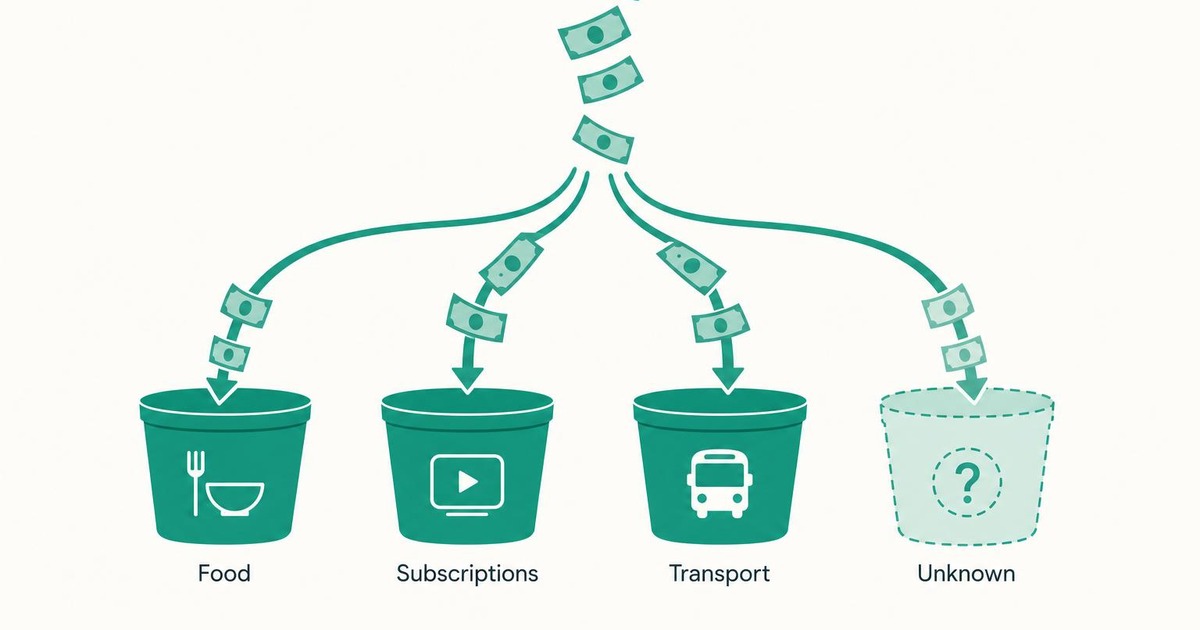
You earn a decent income. You don't think you're spending recklessly. And yet every month, you check your account and wonder: where did it all go?
You're not imagining it. Here's what the data actually shows.
Want to see where your own money actually goes?
Try Spendalyst free for 14 days →Where Most People's Money Actually Goes
Research on spending patterns consistently shows the same surprises:
Food is the biggest shock. Most people dramatically underestimate what they spend on food — because they're mentally separating "groceries" from "delivery" from "restaurants" from "coffee." Combined, food often runs $500–$900/month for a single person without them realizing it.
Subscriptions are invisible. Subscriptions auto-renew, they're small enough to ignore individually, and together they add up faster than they feel.
Convenience spending is high and hard to see. Ubers instead of driving. Delivery instead of cooking. One-click online purchases. Each one feels minor. The category total rarely does.
Irregular expenses feel like emergencies. Car maintenance, doctor visits, holiday gifts, annual renewals — these aren't surprises, but without visibility, they feel like ones.
Why Traditional Tracking Doesn't Work
Most people try one of two things:
Both put the burden on you — to predict, to categorize, to stay consistent. That's why most people quit. If that sounds like you, our guide on how to manage money without budgeting walks through a lighter approach.
A Better Way: Let the Data Show You
Instead of trying to plan your spending in advance, start by seeing what already happened.
Connect your bank to Spendalyst and within minutes you'll see:
No setup. No categories to assign. No budget to maintain.
Just an honest picture of where your money went — and enough context to decide what, if anything, you want to change.
See where your money is going →
The Goal Isn't Perfection
You don't need to cut everything. You don't need a perfect budget. You just need enough clarity to make intentional choices. Once you know where it's going, the next question is usually whether a specific purchase is actually fine — that's how to know if you can afford something without building a budget first.
Most people who start using Spendalyst don't dramatically change their lifestyle — they just eliminate one or two things they weren't even enjoying. That's usually enough to feel financially stable instead of financially stressed.