
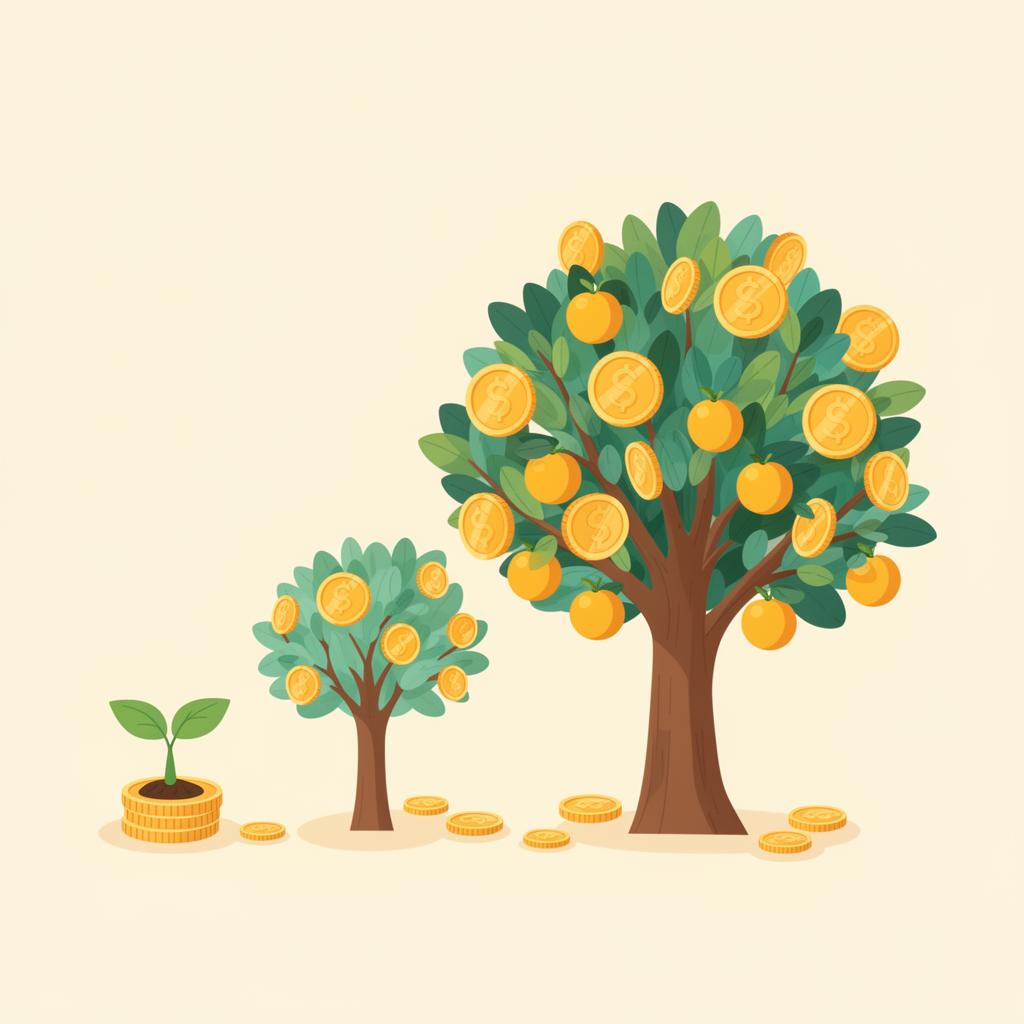
Albert Einstein supposedly called compound interest the eighth wonder of the world. Whether or not he actually said it, the idea behind it is the single most useful thing to understand about money — and you don't need to be good at math to get it.
Compound interest is what makes small, boring, consistent actions turn into surprisingly large outcomes over time. It's why starting early beats starting big, and it's also the quiet force that makes credit card debt so hard to escape. Once it clicks, a lot of money advice suddenly makes sense.
Want to see where your own money actually goes? Try Spendalyst free for 14 days →
What compound interest actually is
Simple interest earns money on your original amount. Compound interest earns money on your original amount plus all the interest it has already earned. You start earning interest on your interest. That's the whole trick — and it's why the growth isn't a straight line, it's a curve that bends upward over time.
A plain-English version: imagine a snowball rolling downhill. At first it's small and barely grows. But each turn picks up a little more snow, and the bigger it gets, the more snow each new turn adds. By the bottom of the hill it's enormous — not because you pushed harder, but because growth feeds on itself.
Why time matters more than amount
Here's the part that surprises people: when you start usually matters more than how much you start with. Because the curve bends upward over time, the early years — when balances are small and it feels pointless — are doing the most important work. They give your money the most time to compound.
This is the real reason "just start" is good advice. A small amount invested in your twenties can end up worth more than a much larger amount invested in your forties, simply because it had two extra decades to snowball. You can't go back and add time later, which makes it the one ingredient worth not wasting.
The flip side: compound interest in reverse
Compound interest isn't always your friend. On debt, the exact same math runs against you. Credit card balances compound too — you owe interest on your interest — which is why a balance left unpaid grows faster and faster, and why minimum payments can stretch a purchase into years of repayment. (It's a big reason smart credit card habits matter so much.)
The takeaway is simple: you want compounding working for you (savings and investments) and not against you (high-interest debt). That's why paying off high-interest debt is often the highest-return thing you can do with a dollar — you're switching off compounding that's working against you.
How to put it on your side — without a budget
You don't need a finance degree or a strict budget to harness this. You need two habits:
The same gentle approach that builds an emergency fund or funds a big savings goal is exactly what compounding needs: small, automatic, repeated, and left alone.
A worked example: the snowball in numbers
Round numbers to keep it simple. Say you save $200 a month and it grows at about 7% a year (a rough long-run average for diversified investing):
Notice the pattern: you didn't triple your contributions, but the balance more than tripled between year 20 and year 30. That's the curve bending upward. The last decade did far more than the first — because by then, compounding was doing most of the work. Start ten years earlier and the final number is dramatically larger, for the same $200 a month.
Frequently asked questions
What is compound interest in simple terms?
Earning interest on both your original money and the interest it has already earned. Your interest starts earning interest, so growth speeds up over time instead of staying flat.
Why is compound interest so powerful?
Because growth feeds on itself. The longer it runs, the faster it grows — turning small, consistent contributions into large sums given enough time.
How does compound interest work against me?
On debt, the same math runs in reverse: you owe interest on your unpaid interest, so balances grow faster and faster. That's why high-interest credit card debt is so hard to escape with minimum payments.
What's the most important factor in compound interest?
Time. Because the growth curve bends upward, starting earlier usually matters more than starting with a large amount. The early years quietly do the heaviest lifting.
The takeaway
Compound interest is the closest thing personal finance has to a superpower: small, steady actions that snowball into big results, with time doing most of the work. Put it on your side by starting now — even small — staying consistent, and leaving it alone. And keep it off the other side by not letting high-interest debt compound against you. You don't need to be a math person. You just need to start the snowball and give it a hill.
Spendalyst helps you find the everyday spending leaks that could be quietly funding your future instead. See where your money's actually going →